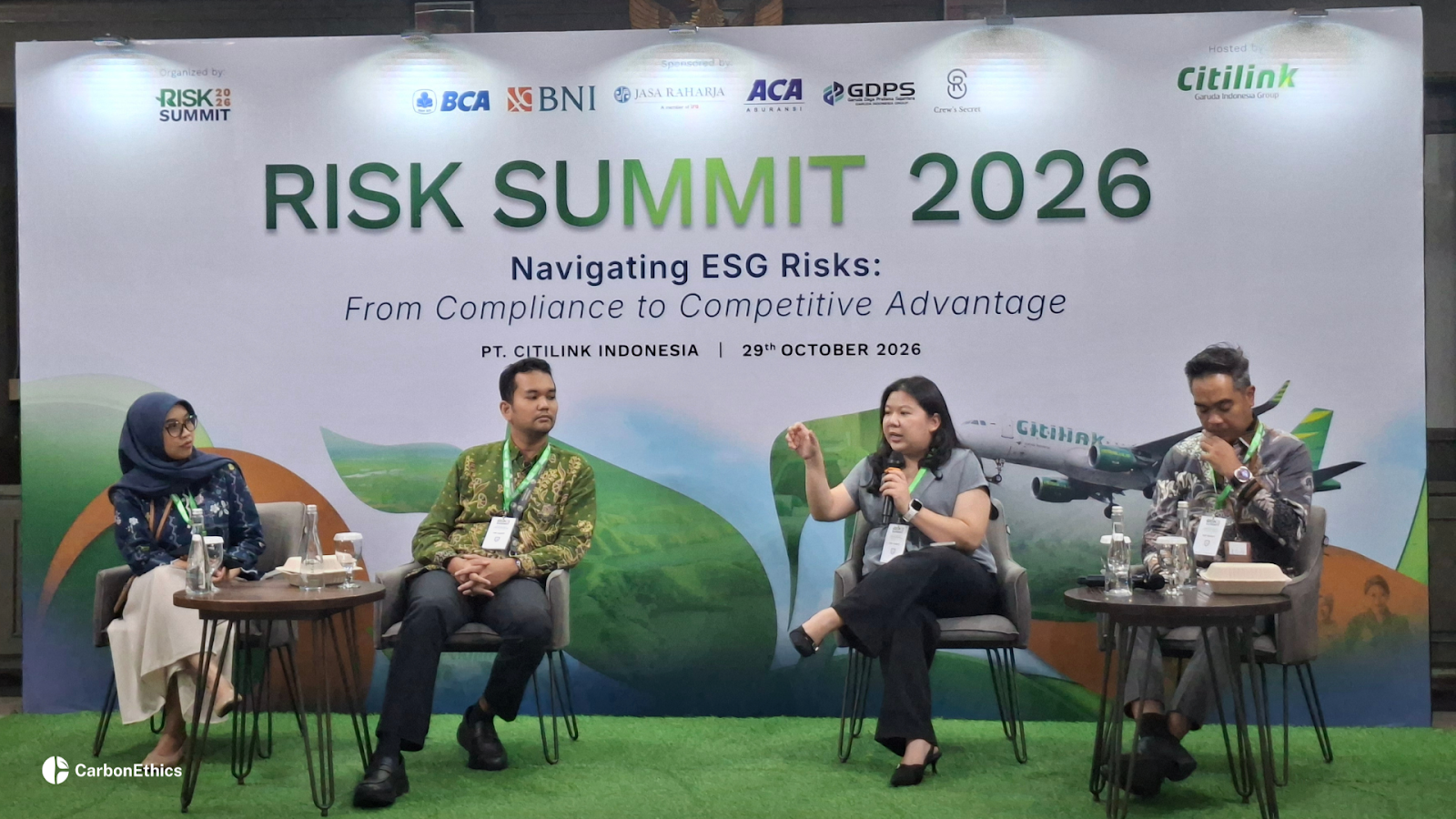
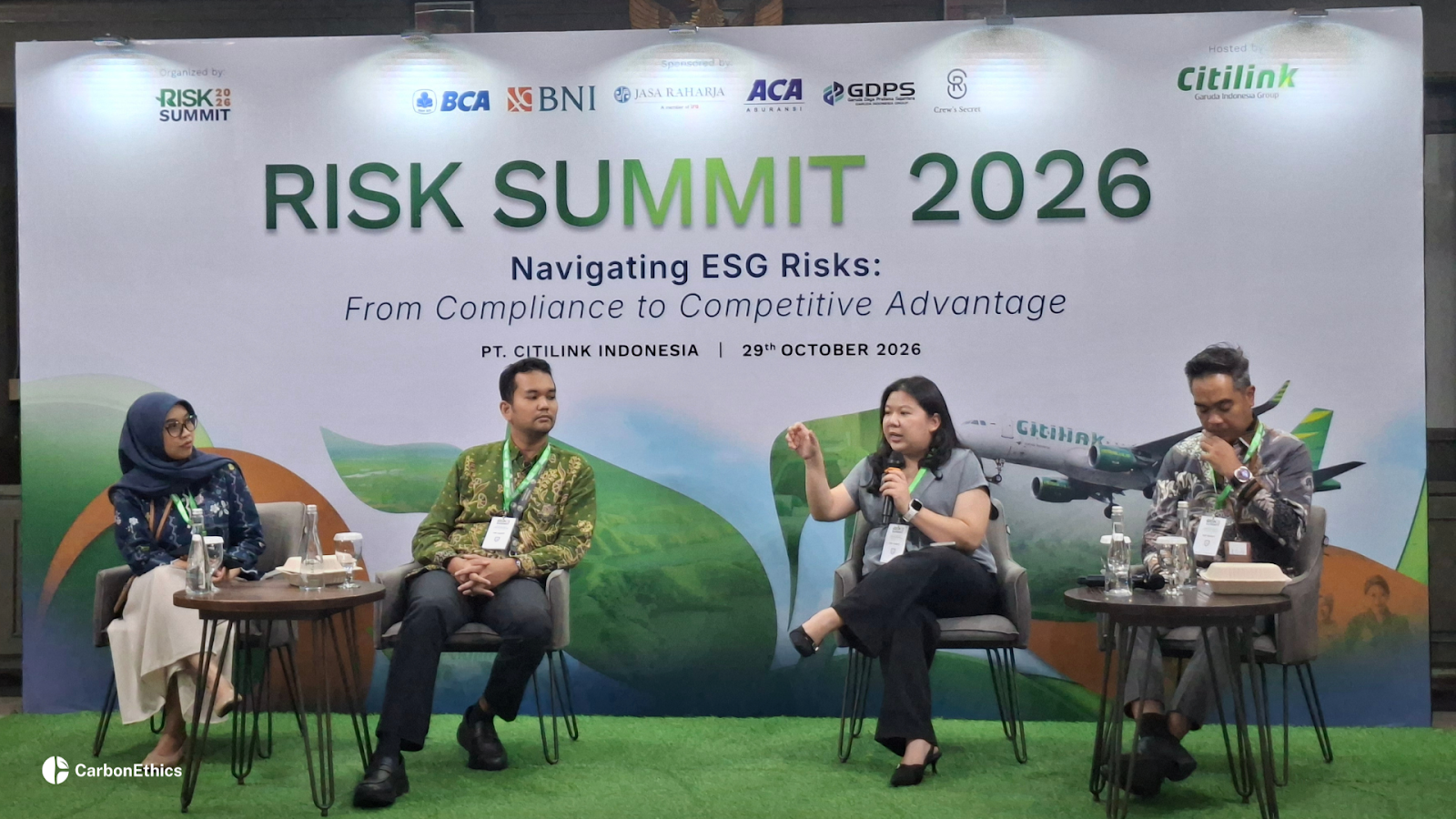
29 October 2026 – CarbonEthics was honoured to join Citilink’s Risk Summit 2026 under the theme “ESG Risk: From Compliance to Competitive Advantage”. The summit explored each pillar of ESG: Environment, Social, and Governance. Representing CarbonEthics, Linda Hartono, Head of Product and Marketing, spoke in the Governance session on how ready the aviation industry is to comply with CORSIA, which becomes mandatory in 2027.
Direct emission reductions should always come first for airlines. High-integrity blue carbon can complement those efforts, and with transparent MRV and long-term partnerships, offsetting can become part of risk management and value creation, not just a compliance cost.
said Linda Hartono, Head of Product and Marketing of CarbonEthics.
Our session, “Blue Carbon in CORSIA: Opportunities for the Aviation Industry”, looked at how Indonesia’s blue carbon ecosystems can become a source of high-integrity carbon credits for airlines, while bringing real benefits to coastal communities.
During the session, we highlighted that decarbonization affects airlines’ cost efficiency, risk management, and long-term competitiveness. Direct emission reductions through operational optimization, fleet renewal, and Sustainable Aviation Fuel (SAF) remain the priority, while high-integrity carbon credits can complement these efforts to meet offsetting obligations under CORSIA.
CORSIA: From Voluntary to Mandatory in 2027
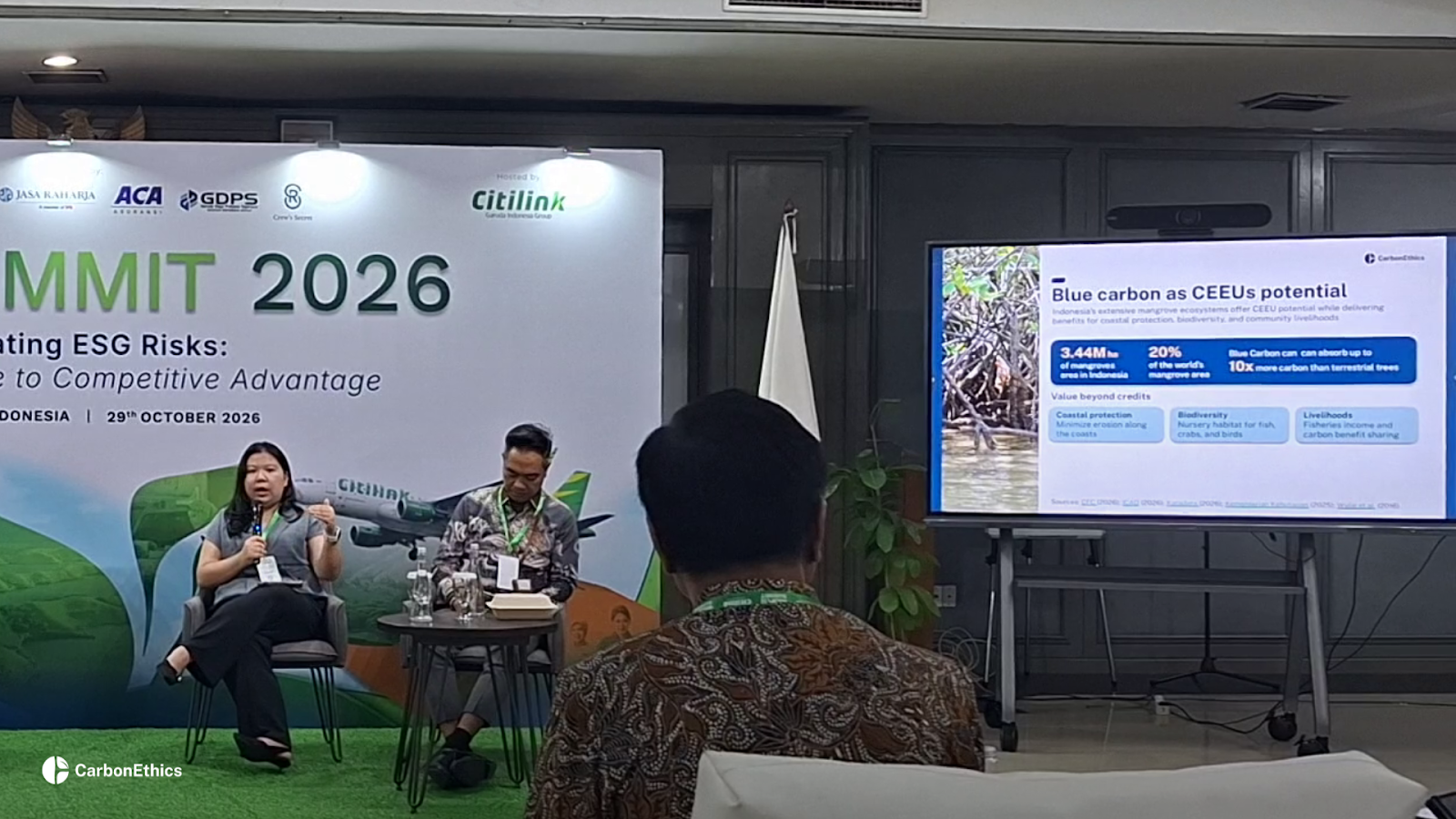
The Carbon Offsetting and Reduction Scheme for International Aviation (CORSIA) is a market-based scheme agreed by the International Civil Aviation Organization (ICAO) in 2016. Its pilot phase (2021–2023) and first phase (2024–2026) are voluntary, while the second phase (2027–2035) requires participation from most ICAO member states. Airlines must offset emissions above 85% of their 2019 levels on covered routes, using CORSIA Eligible Emissions Units (CEEUs) that include authorization for corresponding adjustment (ICAO, 2026).
Indonesian airlines’ demand for CEEUs in the first phase is estimated at 1.9–2 million tonnes of CO₂, and is likely to grow in the second phase (Ayuningtyas, 2026). Indonesia has laid the policy foundation through Presidential Regulation No. 110 of 2025, while sectoral rules, including for marine and fisheries, are still needed to support a domestic supply of CORSIA-eligible carbon credits.
Blue Carbon: A High-Integrity Source of Supply
Indonesia has around 3.44 million hectares of mangroves, more than 20% of the world’s total (Kementerian Kehutanan, 2025). Blue carbon ecosystems such as mangroves, tidal marshes, and seagrass store more carbon than terrestrial forests, while protecting coastlines, supporting fisheries, and sustaining coastal livelihoods. Methodologies such as Verra VM0033 (Tidal Wetland and Seagrass Restoration) provide a pathway for blue carbon credits to meet CORSIA requirements, subject to each phase’s eligibility criteria (Verra, 2026).
Transparent MRV and Long-Term Partnerships
Monitoring, Reporting, and Verification (MRV) ensures that carbon credits are real, additional, permanent, and not double-counted. For blue carbon projects, MRV covers:
Baseline setting and carbon stock measurement
Ongoing monitoring
Independent verification
Registry records
Transparent MRV helps corporate buyers reduce the risks of reversal, failed corresponding adjustments, and greenwashing (IETA, 2025).
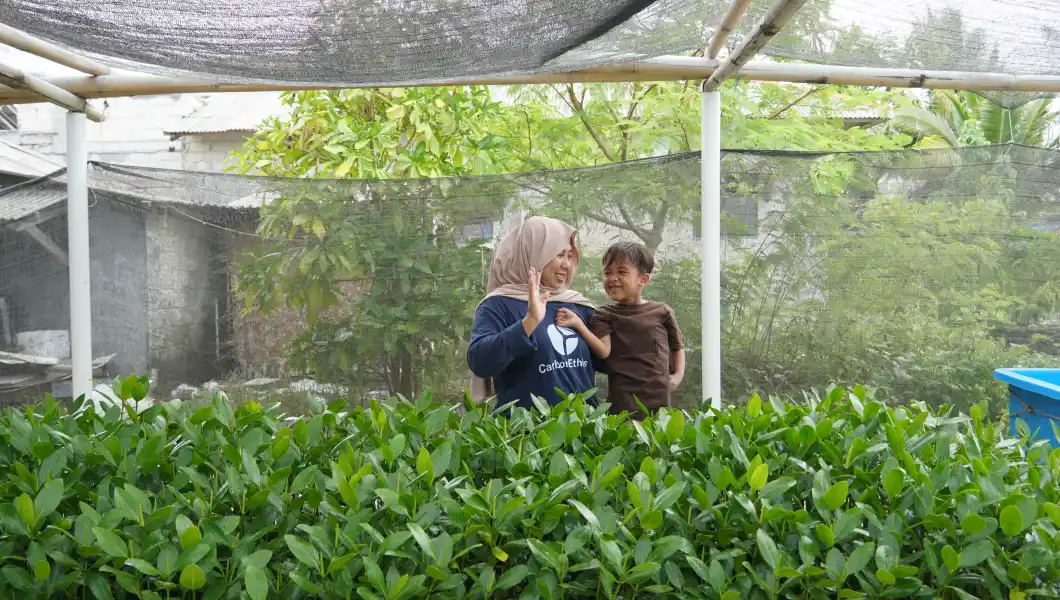
Long-term corporate partnerships put this into action through offtake or forward purchase agreements, project co-development, or climate contributions beyond compliance, each with different risk, cost, and claim profiles. These partnerships also support community development. At sites such as Tanjungpakis, West Java, our restoration work goes hand in hand with programs that help coastal communities build skills, grow local businesses, and strengthen their resilience.
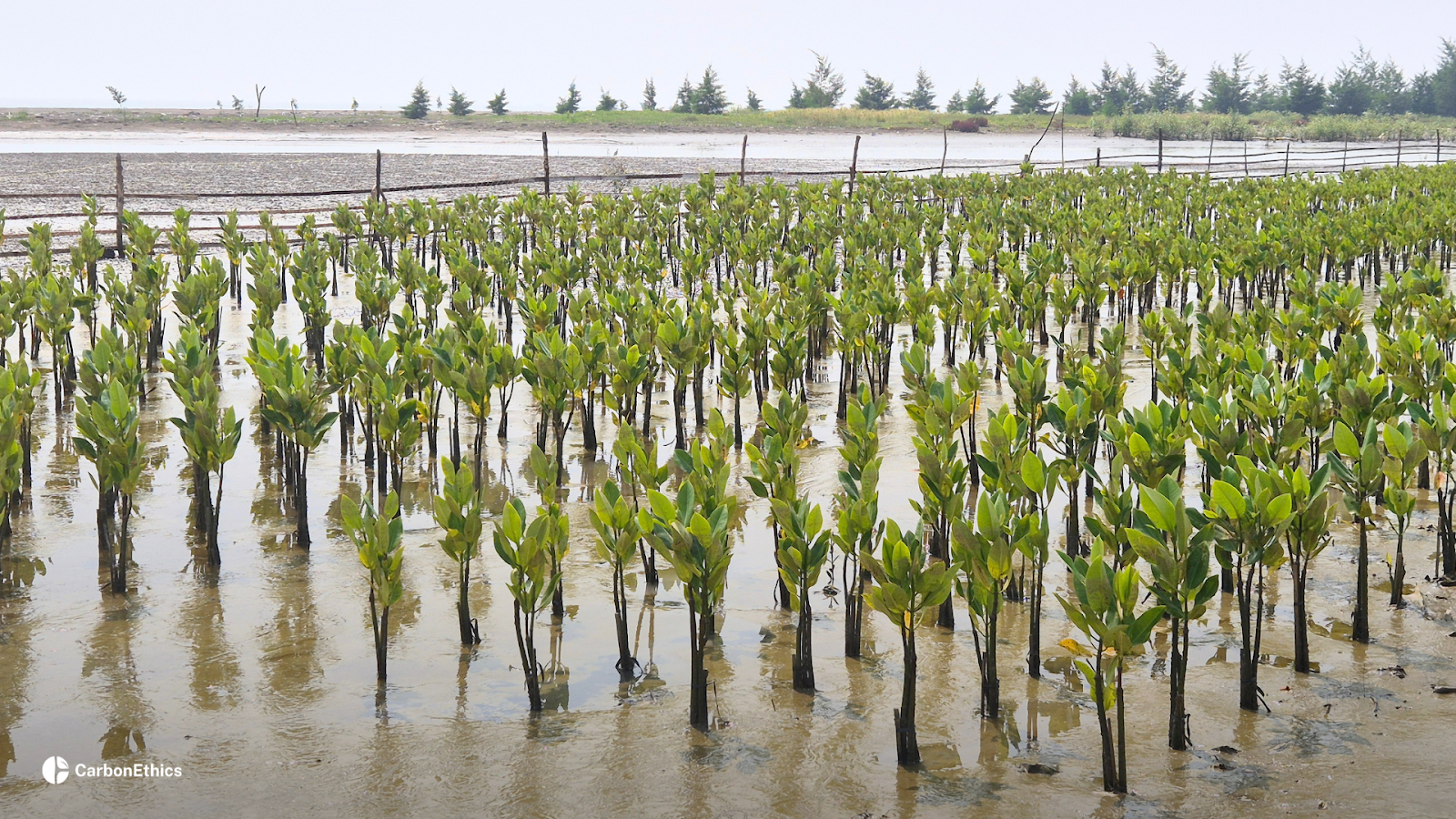
As CORSIA moves into its mandatory phase, we look forward to working with airlines and corporate partners to develop high-integrity blue carbon that complements direct emission reductions and creates lasting impact for coastal communities.
We thank Citilink for inviting us to Risk Summit 2026 and for opening an important conversation on ESG risk and opportunity in aviation. We also thank our fellow speakers and participants for the valuable discussion.
Learn more about CORSIA at www.icao.int/CORSIA
Learn more about our nature-based projects at carbonethics.co/our-projects